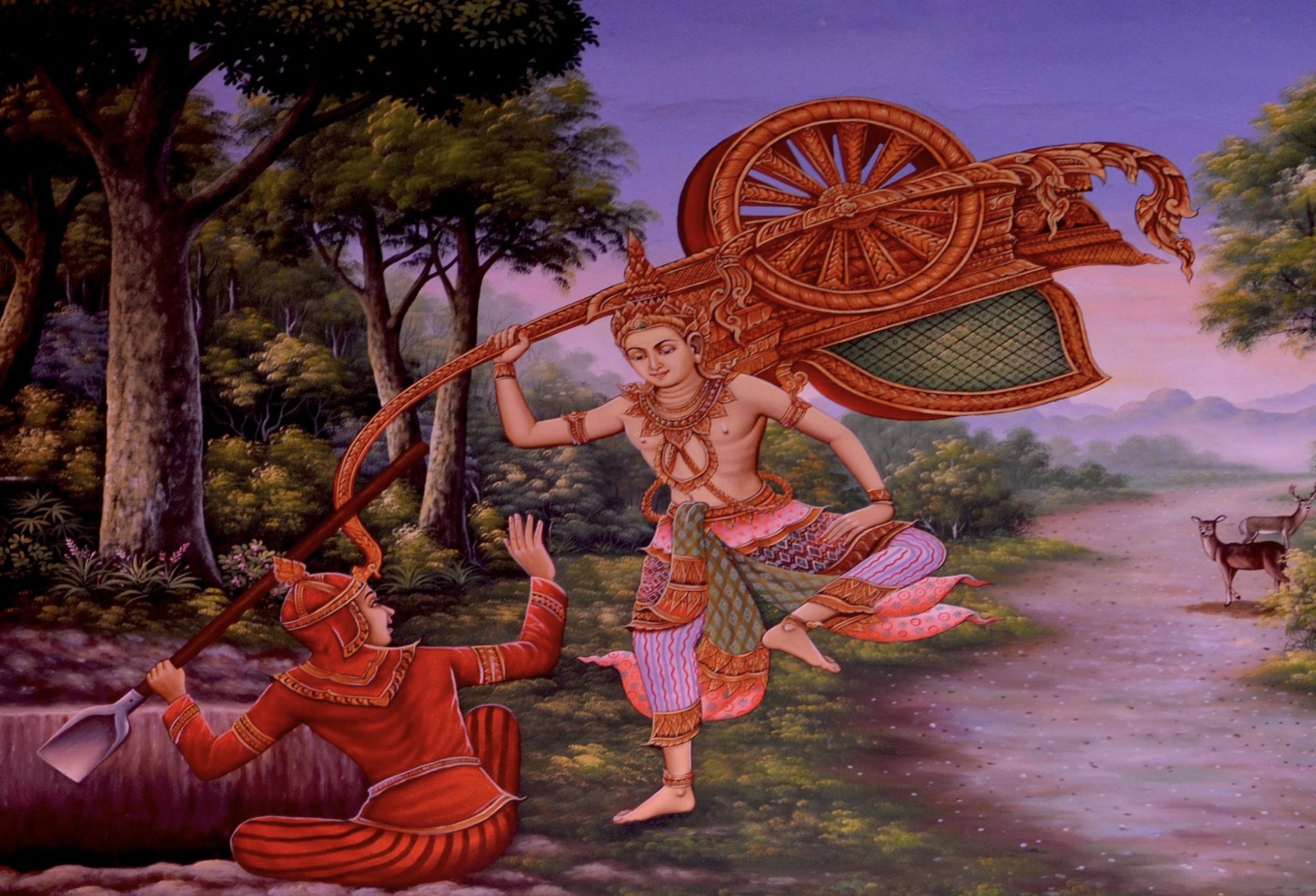
Illustration: Courtesy Pixabay
The ancient Indian philosophical system has ten schools of thought, which could be the highest number of thought processes in the world. Many of the leading western philosophers were inspired by these systems and borrowed the principles for their own thought processes. There are six Orthodox and four Heterodox systems.
Orthodox Schools consist of:
1. The Nyaya System 2. The Vaisesika System 3. Sankhya System 4. Yoga System 5. The Purva Mimansa 6. The Uttar Mimansa.
Heterodox Schools consist of:
1. Carvaka System 2. Buddhism 3. Jainism 4. Arthashastra
Orthodox Schools
The Nyaya System
The Nyaya System applied the analytical and rational method of ethical matters. It took up the ordinary stock notions of conventional philosophy as space, time, cause, matter, mind, soul and awareness, and after inquiry set forth the results in the form of a theory of the universe. Nyaya System strives towards a logical and analytical investigation of Indian philosophy with a belief to rationally synthesizing the ends of life and of spirituality, to creating a logical relationship between body and soul, and exhibiting a way of redemption.
Western scholars have highly praised this system and called it “an idealism with virtue and practical consistency, of which there are few instances.” Nyaya school exercised a sincere influence on the advancement of Indian thought and scientific scrutiny by indicating the pitfalls to be prevented and the tenets of ethical wisdom to be observed.
The Vaisesika System
The Vaisesika was virtually a system of explicitness and derives its name from its doctrine of atomic individualities (viseshas) and is also known as the ‘Philosophy of Discrimination’. The first standardized exposition of this system is found in the sutras of Kanada.
The physical theory is formulated in connection with the five substances viz. earth, water, light, air, and akasha. According to this system, the ultimate constituents of concrete aspects are atoms(pramanus). Four classes of ‘Pramanus’ responding to the four great classes of material objects earth, water, light, and air. It holds that there cannot be lasting destruction. The structures may disappear but the atoms with their qualities continue to exist.
The most significant contribution of this school of Indian philosophy is its concept of the atom, its examination of the incredible world, its theory of propagation of sound and its observations of heat and light.
Sankhya System
This is probably the oldest of the six systems of Indian Orthodox philosophy. We find some explanation of it in the Bhagavad-Gita as well as Upanishads. Its founder is sage Kapila. The earliest existing text of this system is Sankhya-karika of Isvarakrsna of the fourth century A.D. This system dismisses the stringent categories of the Nyaya-Vaisesika system as insufficient instruments for establishing the universe. It substituted evolution for creation.
It proclaims that there prevail in the universe two active principles named Purusha and Prakriti. The Purusha or Soul is the pure spirit, which in its natural state is bereft of all attributes, is indestructible, and is unaffected by sentiments and sensations. But deceived by Maya and captivated by the glamour of Prakriti, the Purusha plunges into the former and gets entangled in the web of samsara and karma.
The Prakriti is evolved out of three Gunas—Sattva (goodness, truth, purity, etc.), Rajas (passion for activity) and Tamas (inertia, stolidity, obstruction, etc.). These Gunas do not prevail individually but generally blend with one another. Sattva and rajas are contained by tamas.
This system exercised significant leverage on philosophies in other countries. Western philosophers believe that ‘Plato, Schopenhauer, and Hermann are full of Sankhyan thoughts’.
Yoga System
The term has been employed in the Upanishads and in Bhagavad-Gita to indicate the union of the soul with the Supreme. The Yoga system accepts the philosophy of Sankhya but does not give that much significance to knowledge as a means of liberation. It, on the other hand, holds that emancipation can be attained only by devotional exercises and mental discipline.
It thus initiated the concept of God. The Chitta is the source of Yoga and its distraction has to be solely regulated. Yoga assists in the development of super-sensory perception by bolstering the body and transforming the psychic organism. It helps the individual to go beyond the barriers of sense perception and attain Samadhi or the stage in which the soul gets a blissful vision.
The Yoga system does not avoid the physical part of presence, because it is through the body that spiritual life is expressed. To overcome the obstacles in the way of the growth of spiritual life, the Yoga system proposes an eightfold method: Yama (abstention), Niyama (observance), Asana (posture), Pranayama (regulation of breath), Pratyahara (withdrawal of the senses), Dhyana (fixed attention) and Samadhi (concentration).
The Purva Mimansa
This school of Indian philosophy differs from other schools in so far as it is purely a school of illustration, instead of liberation. Its principal objective was to illustrate the validity of Dharma(duty) by regulating the teachings of the Vedas. The initial work of this school is the sutras of Jaimini, which were presumably written in the second century B.C.
It’s principal is based on, that the soul is a reality, and is distinct from the body and the senses. The soul can be liberated only by faithfully pursuing the orthodox rites, and ceremonies stipulated in the Vedic texts, which are divinely inspired, sacred, indefinite and infallible.
The Uttar Mimansa
The Uttar Mimansa, most famously known as Vedanta is the most significant of the six schools of philosophy. In fact, most of the central features of modern intellectual Indian philosophy were contributed by this school. The essential text of this system is Brahma Sutras attributed to Badarayana, written early in the 1st century AD. In this work, he made an endeavor to organize the teachings of the Upanishads. Perhaps the best exposition was composed by Sankara, a Saivite scholar of South India.
According to this philosophy, the Brahma is an utmost Reality and is the source, support, and liquidator of the universe. The individual soul or the atman is only a fraction of the Brahma and is not different from it. Brahma is shapeless and formless, and it assumes different names and forms.
Heterodox Schools
Carvaka

Also known as Lokayata, Carvaka is an atheistic school of thought. Its founder was Carvaka, author of the Barhaspatya Sutras in the final centuries B.C., although the original texts have been lost and the available knowledge is based largely on the critique of the ideas by other schools. As early as the 5th Century, Saddaniti and Buddhaghosa correlated the Lokayatas with the Vitandas (or Sophists), and the term Carvaka was first documented in the 7th Century by the philosopher Purandara, and in the 8th Century by Kamalasila and Haribhadra. As a vital philosophical school, Carvaka appears to have disappeared sometime in the 15th Century.
Buddhism

Buddhism is a non-theistic system of principles based on the teachings of Siddhartha Gautama(Buddha), in the 5th Century B.C. The point of God is primarily incidental in Buddhism, and it is primarily based on the denial of certain orthodox Indian philosophical notions (although it does share a belief in karma). Buddhism endorses a Noble Eightfold Path to end suffering. Its philosophical principles are known as the Four Noble Truths (the Nature of Suffering, the Origin of Suffering, the End of Suffering, and the Path Leading to the End of Suffering). Buddhist philosophy deals greatly with difficulties in metaphysics, phenomenology, ethics, and epistemology.
Jainism

The main tenets of Jain philosophy were founded by Mahavira, in the 6th Century B.C. A basic principle is an anekantavada(many-sidedness), the idea that truth is recognized differently from different points of view, and that none of the views are entirely true. As per the Jainism, only Kevalis, those who have endless wisdom, can know the true answer, and that all others would only know a part of the answer. It stresses spiritual freedom and the parity life, with specific priority on non-violence, and propagates self-control, vital for achieving the fulfillment of the soul’s true nature.
Arthashastra
The Arthashastra, associated with the Mauryan minister Chanakya in the 4th Century B.C., is one of the earliest Indian texts dedicated to political philosophy, and it examines the ideas of statecraft and economic policy.
Conclusion
It is intriguing to note that most of the inquiries, which western philosophers delved into only in the age of enlightenment, had been asked and answered over two to three millennia ago. This clearly show the openness of society and the practice of holding dialogue and debates in ancient India. The vibrant intellectual life started falling apart after the invasions from Central and Middle East Asia.
References:
1. The Upanishads: Translations and Commentary by Sri Aurobindo
2. The Bhagavad Gita
3. Light on the Yoga Sutras of Patanjali by BKS Iyengar
4. The Dhammapada by Eknath Easwaran
5. The First and Last Freedom by J Krishnamurti
6. Chanakya Neeti: Translation and Comments by Vishwamitra Sharma
7. The Nyāya theory of knowledge by Satischandra Chatterjee
8. Matter and Mind: The Vaisesika Sutras of Kanada by Subhash Kak
9. Samkhya Karika by Brahmrishi Vishvatma Bawra
10. Purva Mimamsa Sutras of Jaimini by Pundit Ganganath Jha
11. Six Systems of Indian Philosophy by F. Max Muller


 Insightful Geopolitics
Leave a reply to Romina Cancel reply