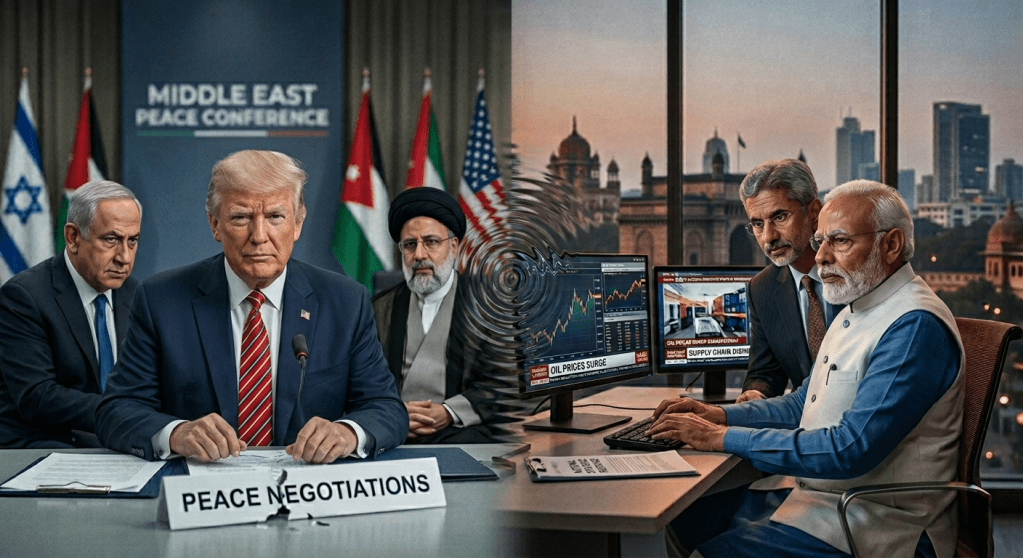
In April 2026, the Middle East plunged into one of its most dangerous crises in years. It started in late February when the United States and Israel carried out large-scale airstrikes on Iran, targeting military sites, nuclear facilities, and top leaders, including the late Supreme Leader Ali Khamenei. Iran hit back hard with missiles and drones not only at Israel and American bases but also at energy infrastructure across Gulf countries like the United Arab Emirates, Saudi Arabia, Qatar, and Bahrain.
Shipping through the Strait of Hormuz, the narrow choke point that carries about a fifth of the world’s oil, was severely disrupted as Iran restricted passage in retaliation. A short two-week ceasefire was announced in early April, with Pakistan acting as a middleman. Israel had outright rejected the Pakistani mediation and Iran called them opportunists. Nevertheless, the high-level talks in Islamabad between the US and Iran quickly collapsed over deep disagreements, especially on Iran’s nuclear program.
Now, as of mid-April, the United States under President Donald Trump has begun a naval blockade of Iranian ports and the strait itself, raising fears of even wider conflict. Iran has called the move an act of piracy and warned of retaliation. For India, these events are not distant headlines. West Asia is its extended neighborhood, supplying the energy that powers daily life and economic growth. When peace efforts break down like this, the effects cross the Arabian Sea almost immediately, hitting security, the economy, diplomacy, and ordinary households.
The Security Challenge
The security challenges for India have grown urgent. The Indian Navy has shifted from routine patrols to high-alert missions in the Gulf of Oman and Persian Gulf. With risks of proxy attacks, drone strikes on oil facilities, or harassment of tankers, the navy is escorting Indian-flagged vessels to keep supply lines open. Operations similar to past missions, such as Operation Sankalp, have been received, diverting warships and resources from other areas, such as the eastern seaboard and the South China Sea. Surveillance flights by P-8I aircraft and drones are tracking suspicious activity, including “dark shipping” that hides identities or possible mine laying.
Intelligence sharing with partners like the United States and France has increased, but India is also maintaining its own independent monitoring to avoid being dragged into broader rivalries. The large Indian diaspora of nearly 90 lakh people working in the Gulf adds another layer of worry. Their safety is at risk if fighting spreads, and there is always the danger that regional instability could fuel radicalization back home, threatening internal security. So far, Iran has indicated it is in touch with Indian officials to help ensure passage for Indian ships, but the blockade has already created tense moments for merchant vessels and their crews.
Economically, the crisis is delivering a painful blow. India imports around 85% of its crude oil and nearly 90% of its liquefied petroleum gas from the Middle East. When the Strait faces blockades or attacks, global oil prices do not just rise—they spike sharply. Brent crude has climbed to around $100 to $ 120 per barrel in recent weeks due to disruptions and stranded tankers. For Indian consumers, this means higher costs for everything from transport and logistics to manufacturing and daily goods. Inflation imported from fuel prices is already pushing up the cost of food and household items. The current account deficit widens as India pays more for the same energy, putting downward pressure on the rupee.
A weaker currency makes other imports, like electronics and defence equipment, even more expensive, feeding further inflation. Experts estimate that for every ten-dollar jump in oil prices, India’s GDP growth can drop by 0.3 to 0.5%. If the standoff drags on, the economy could lose one to two percentage points of growth this year, slowing the push toward the five-trillion-dollar goal. Industries such as steel, cement, aviation, and even small businesses are feeling the squeeze, with risks of layoffs and slower hiring. On top of that, remittances from Indians in the Gulf—billions of dollars that support families back home—are now uncertain. Large-scale evacuations, if needed, would be costly and logistically tough. The government has already taken steps, such as cutting excise duties on petrol and diesel, to shield people, but the strain is clear.
The Diplomatic Balancing
Diplomatically, India is walking a careful tightrope. It has long followed a policy of balancing ties with Israel, Iran, Saudi Arabia, the UAE, and others without picking sides. This “de-hyphenation” approach is now harder than ever. The failed ceasefire talks and the new US blockade force present tough choices: whether to align more closely with Western-led security measures or stick firmly to strategic autonomy to protect energy supplies.
Major projects that were meant to connect India to the world, such as the International North-South Transport Corridor and the India-Middle East-Europe Economic Corridor, depend on calm waters in the region. Right now, they are stalled or delayed, leaving India somewhat cut off from faster trade routes. Gulf countries like Saudi Arabia and the UAE, which have themselves been targeted by Iranian strikes on their oil and gas facilities, are calling for stability and want the strait fully reopened. They have condemned the attacks and are pushing for any future deals to guarantee their security.
India has welcomed the earlier ceasefire and stressed the need for unimpeded navigation, de-escalation, and dialogue. At the same time, it is engaging quietly with all sides, including Iran on ship passages. The vacuum left by broken talks also opens the door for other players. China and Russia have shown interest in stepping in as a mediator or security partner, which could challenge India’s growing role as a net security provider in the Indian Ocean. India must stay proactive to avoid being sidelined in shaping the region’s future.
Back home, the fallout reaches everyday life and politics. Fuel prices remain a sensitive issue that opposition parties quickly seize upon, criticizing any perceived gaps in energy security. Rising costs hurt sectors across the board and can spark public frustration. Millions of families rely on remittances from the Gulf, and any threat to those workers creates anxiety. The government faces pressure to protect both the economy and its people while keeping India’s image strong on the global stage. If the crisis lingers, narratives about national resilience will be tested in parliament and on the streets.
A Peep into the Future
To bolster its energy security, India has moved aggressively to diversify its sourcing, now importing crude oil from over 30 countries. While traditional Middle Eastern partners remain vital, Russia has emerged as a top supplier, often accounting for over 20% to 35% of monthly imports since 2023. Additionally, New Delhi has ramped up shipments from the United States, West Africa (notably Nigeria and Angola), and Latin America (Guyana and Brazil) to mitigate the risks of regional volatility.
As of early 2026, India’s storage framework is a two-pronged system designed to withstand supply shocks:
• Strategic Petroleum Reserves (SPR): Managed by ISPRL, the current Phase-I capacity is 5.33 million metric tonnes (MMT) across three locations: Visakhapatnam, Mangaluru, and Padur. These underground rock caverns provide approximately 9.5 days of net import coverage. Recent data indicate these reserves are currently about 64% to 66% full, holding roughly 3.37 MMT.
• Commercial Reserves: Beyond the SPR, Indian oil marketing companies (OMCs) maintain their own storage. Combined, India’s total oil stock (strategic + commercial) currently provides approximately 74 days of coverage, still shy of the 90-day benchmark recommended by the International Energy Agency (IEA).
To bridge this gap, India is pursuing Phase-II expansion, which aims to add 6.5 MMT of additional capacity at Chandikhol (Odisha) and Padur (Karnataka). Once completed, the total strategic capacity will rise to 11.83 MMT.
However, these expansion plans are currently facing several hurdles:
- Funding & PPP Models: The government is shifting toward a Commercial-cum-Strategic public-private partnership (PPP) model. Attracting private investors to build and manage these massive underground facilities while ensuring the government retains “first right” to the oil has led to complex contractual negotiations.
- Land Acquisition: Similar to many large-scale infrastructure projects, acquiring the necessary land and securing environmental clearances for the Chandikhol site has caused significant timeline shifts. The Padur project has taken a political hue.
- Technological Complexity: Building deep underground rock caverns requires specialized engineering that has faced technical delays in the survey and excavation stages.
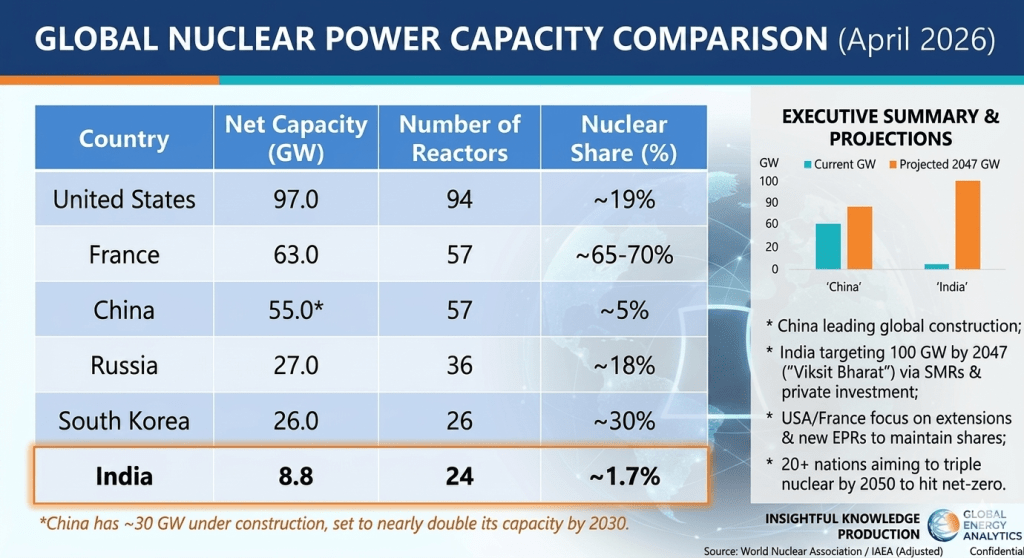
While oil remains the immediate concern, long-term energy autonomy rests on India’s Three-Stage Nuclear Power Programme. India holds some of the world’s largest thorium reserves (approximately 25% of the global total), yet it currently lags in commercial thorium utilization due to the extreme technical difficulty of breeding fuel.
- The Second Stage Milestone: In April 2026, India achieved a historic breakthrough as the Prototype Fast Breeder Reactor (PFBR) at Kalpakkam finally achieved first criticality. This reactor is the “bridge” to the thorium future; it uses plutonium to “breed” more fuel and will eventually be used to convert thorium into fissile Uranium-233.
- The Delay Factor: The thorium dream has been delayed for decades—the PFBR itself is over 16 years behind schedule and has seen its costs double to over ₹8,100 crore. These delays stem from the unique challenges of handling liquid sodium coolant and the “closed fuel cycle” technology, which few countries have mastered.
By accelerating the transition to Stage 3 (Advanced Heavy Water Reactors), India can finally turn its coastal monazite sands into a source of carbon-free, sovereign power, reducing the heavy lifting required by the navy and oil diplomats in West Asia.
Looking Forward
Looking to the future, India needs a fresh and forward-looking West Asia policy to turn these challenges into opportunities. Short-term steps include rapidly building up strategic petroleum reserves to buffer against price shocks and shortages. The navy must accelerate development of blue-water capabilities, with more long-range assets to secure the Arabian Sea and protect trade routes under Indian influence. Diversifying energy sources is essential—shifting more imports toward Russia, West Africa, and even domestic production or renewables can reduce dependence on any single region.
Diplomatically, New Delhi can no longer afford to be just an observer. It should use its growing global stature, strong ties across the Gulf, and neutral standing to act as an active mediator when possible, helping keep communication channels open even in tough times. By leading calls for dialogue within the Global South, India can help shape outcomes that protect its interests.
In the years ahead, the predictions for India are cautiously optimistic if it acts decisively. By 2030, a stronger energy security framework could shield the economy from similar shocks, allowing steady growth even amid regional turbulence. Naval presence in the western Indian Ocean would solidify India’s role as a key stabilizer, boosting confidence among trading partners. As I suggested two years ago, realignment of the India Middle East Europe Economic Corridor (IMEC) via southern Oman is very important. Successful diversification and connectivity projects, once stability returns, could unlock new markets and reduce vulnerabilities. However, if the current blockade and tensions drag into a prolonged standoff, short-term pain is likely—higher inflation, slower growth, and political pressures at home.
The crisis shows how tightly India’s rise is linked to peace in West Asia. When guns fall silent there, the benefits flow to cities like Mumbai and villages across the country. With smart planning today, India can emerge not just unscathed but as a more influential power, securing its energy needs, protecting its people, and playing a bigger part in a stable, prosperous region. The coming months will test this vision, but the foundations for long-term success are already being laid through quiet diplomacy and strategic investments.


Leave a Reply