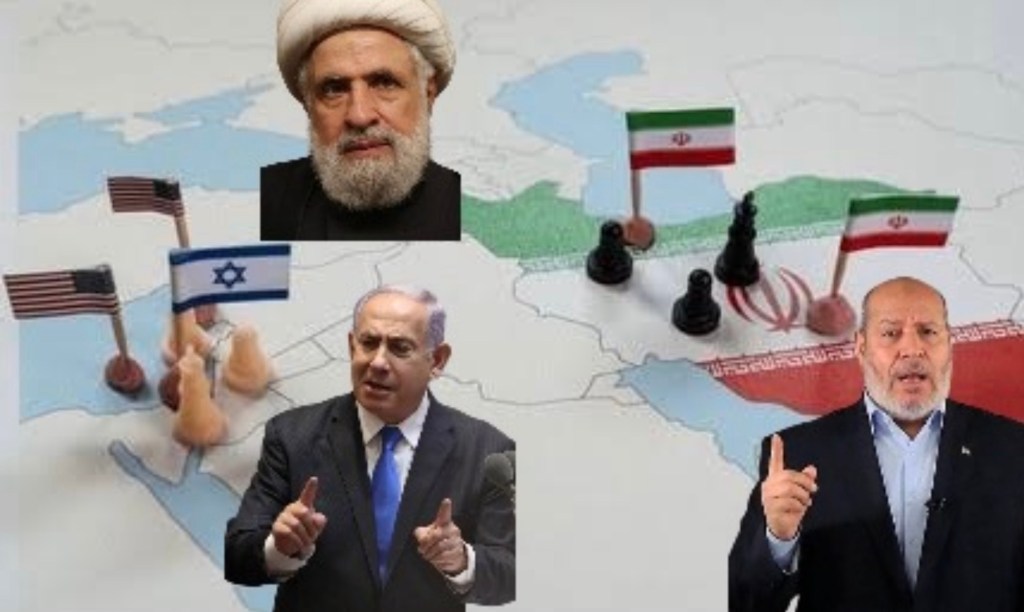
No part of the world demonstrates a greater contrast between objective reality and U.S. foreign policy than the Middle East. The invasion of Iraq, the “Freedom Agenda,” and various attempts to resolve the Israeli-Palestinian conflict all illustrate how American ideals have clashed with tangible failures over the past several decades. Yet, misconceptions continue. A recent example is the growing support among at least 26 Democratic members of the U.S. Congress for recognizing a Palestinian state. During an on-the-record meeting at the Council on Foreign Relations last week, Rep. Ro Khanna of California, who is leading this initiative, stated that U.S. recognition of Palestine would promote the two-state solution. He asserted, “This will offer hope in the region and provide a concrete solution away from Hamas.”
While it is commendable that Khanna has a serious interest in resolving the Israeli-Palestinian conflict for the benefit of both peoples, his vision mirrors what the U.S. President George W. Bush proposed 23 years ago: two democratic states—Israel and a demilitarized Palestine—living peacefully side by side. However, Khanna has switched the order, prioritizing recognition of Palestine before peace. He struggled to clarify how recognition would lead to the desired outcome, displaying a somewhat naïve perspective regarding the political realities within Israeli and Palestinian societies.
The two-state solution was already a difficult proposition before October 7, 2023. The attacks by Hamas on Israel that day and the subsequent war in Gaza have made it nearly impossible to envision such a solution. Khanna’s frequent references to long-irrelevant Israeli politicians highlight a typical American tendency to perceive the world as they wish it to be rather than how it truly is.
This issue isn’t limited to Khanna and his colleagues; the Trump administration has also engaged in wishful thinking—particularly regarding the disarmament of Hezbollah and Hamas. Israel’s military operations in Lebanon, which began in September 2024 with the notorious beeper attack, have purportedly liberated Lebanon’s political system from Hezbollah’s control, enabling the election of a new president and a new prime minister. President Joseph Aoun and Prime Minister Nawaf Salam have initiated the process of dismantling the “state within a state” that Hezbollah established over four decades. Yet, despite Israel’s military achievements and the good intentions of Lebanon’s new leaders, Hezbollah remains intact. While it may be weaker than before, it still possesses weaponry, and its members stay motivated.
Consequently, Israel has been “enforcing” the cease-fire brokered by Washington in Lebanon last November through intermittent military strikes—a reflection of the Trump administration’s desire for Hezbollah to be disarmed. U.S. Ambassador to Turkey Tom Barrack, a significant figure in Middle East diplomacy, proposed a four-phase plan to empower the Lebanese Armed Forces to achieve this goal. However, Barrack may be underestimating the volatility surrounding Hezbollah’s disarmament. How can an organization founded on the concept of “resistance”—whose flag boldly names it “The Party of God” and proclaims “The Islamic Resistance in Lebanon,” complete with an assault rifle—be expected to disarm? This request essentially asks Hezbollah not to be Hezbollah.
While this is an admirable objective, achieving it—especially by the end of the year, as the Trump administration demands—seems unrealistic. When Lebanon’s military leaders presented their disarmament plan to the government in early September, Hezbollah-affiliated members walked out in protest. Many citizens from Lebanon’s Sunni, Christian, and Druze communities likely support Hezbollah’s disarmament. However, substantial support from the Shiite community is doubtful; Hezbollah’s weapons have provided power and security for Shiites, who hold more significant numbers than influence in Lebanon’s confessional system, where each religious faction is granted specific roles.
Hezbollah leader Naim Qassem, the successor to Hassan Nasrallah, who was killed in an Israeli airstrike in September 2024, navigates the dual roles of guerrilla leader and politician. Agreeing to disarm would likely erode his support within the community. Hezbollah’s political representatives argue that the military’s proposed plan amounts to “complete submission” to American authority. They question why Hezbollah must relinquish its weapons before Israel withdraws from the five outposts held by the Israeli military in southern Lebanon. While the Lebanese military could resort to force, the potential for violence is evident. Although Hezbollah may not be a match for the Israeli military, the AK-47s, rocket-propelled grenades, and heavier weaponry that the group still holds pose a significant threat to peace.
The Trump administration and others in Washington demanding Hezbollah’s disarmament seem naïve about the potential consequences of an armed confrontation between Hezbollah and Lebanese forces. However, I remain open to being surprised. There have been many unexpected developments in the Middle East over the past two years. Perhaps Hezbollah is weaker than many believe, and Lebanon’s military could successfully confiscate all of the group’s weapons. Still, I am skeptical that Lebanese commanders are willing to take that risk. For this reason, a longer, more gradual process of negotiations and discreet dealings—one that may leave Hezbollah with some weapons as a support to the armed forces—appears more realistic and prudent than the approach outlined by Barack Obama.
A similar situation exists with Hamas (the Islamic Resistance Movement). This group will not surrender its arms unless forced to do so. Despite their considerable efforts and firepower, the Israelis have not succeeded in compelling Hamas to submit. While it wouldn’t be a bad thing to require the group to disarm, is that demand consistent with reality? I don’t believe so. This perspective is also echoed by the Israeli military chief of staff, who has advised the Israeli government to accept recent ceasefire proposals.
It would certainly be beneficial for a Palestinian state to exist peacefully alongside Israel. It would also be a positive development if both Hezbollah and Hamas disarmed; however, the reality makes these goals extremely difficult to achieve. Ro Khanna—a progressive Democrat—seems to be adopting an approach reminiscent of George Bush’s two-decade-old playbook, not only in his vision of a two-state solution but also in the need for intensive U.S. engagement in the Middle East for peace processing and nation-building.
It is puzzling that the Trump administration is willing to engage in the complex issue of disarmament, particularly in Lebanon. This stance contradicts Trump’s earlier remarks during his visit to the Gulf in May, when he explicitly rejected U.S. involvement in such matters. Are U.S. officials genuinely trying to improve the situation, or are they unaware of the realities on the ground? As I write this, Israeli fighter jets are bombing Yemen’s port of Hodeidah, adding a new layer to an already complicated scenario. Regardless of their best intentions, the U.S. is likely to fail in this endeavor. Moreover, the U.S. track record over the past three decades in the Middle East serves as evidence of this misunderstanding the region.


 Insightful Geopolitics
Leave a reply to Judithann Campbell Cancel reply