
Austrian economist Joseph Schumpeter introduced the term “creative destruction” in his 1942 book, Capitalism, Socialism, and Democracy. He used this term to describe the innovation and industrial transformation processes in which new technologies and business models replace older ones.
Many people initially believed that U.S. President Donald Trump was engaging in a process of creative destruction aimed at reshaping the old world order for a better future. They assumed that Trump 2.0 would take a much tougher stance on China. However, assumptions can be misleading, and in this case, they were far from the truth. The “Liberation Day” tariffs announced on April 2nd sent shockwaves worldwide, and the subsequent events are history now.
India, the most significant member of the Quad and the only country capable of challenging China, was faced with a 26% tariff. On August 1st, while many nations received relief from high tariffs—with Vietnam’s reduced from 46% to 20%, and Sri Lanka’s from 44% to 20%—India’s tariff was only slightly lowered by 1%, bringing it to 25% (now 50%).
Trump’s Potemkin Illusion
Before this in May, following a border flare-up between India and Pakistan, Trump claimed that he had used the threat of tariffs to persuade Prime Minister Narendra Modi to de-escalate tensions. India has a longstanding policy of not permitting foreign interference in its disputes with Pakistan—something well-known in Washington. Embarrassed and angered, New Delhi refuted Trump’s claim by releasing an official account of their phone call that presented a different narrative.
Indian officials have expressed their concerns that Trump’s statement equates India with Pakistan, which undermines decades of strengthening U.S.-India bilateral cooperation. Additionally, Trump has consistently displayed immature behavior. He has been engaging with Pakistani army chief General Asim Munir while making aggressive remarks against India, escalating tensions between the countries. By inviting Asim Munir to a luncheon, Trump has also contradicted the long-standing U.S. stance of supporting democracies.
Next, the Trump administration threatened to impose tariffs on BRICS countries, which include Russia and China, but also India. This further incensed New Delhi, as it viewed the threat as an infringement on its sovereignty and autonomy rather than a legitimate trade issue. Last week, the administration amplified tensions by threatening secondary tariffs against India for its considerable purchases of Russian oil. Despite adhering to the U.S.-led multilateral price cap on Russian oil for the past three years, the Indian government has faced sanctions on private companies due to various violations. Trump’s threat to penalize India for complying with previously agreed-upon international rules is unprecedented and has once again enraged New Delhi.
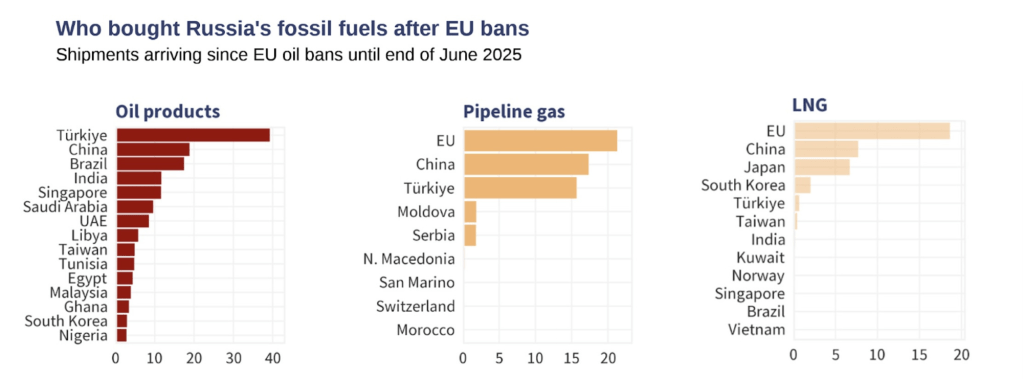
Trump administration has singled out India for these threats while not targeting China, Turkey, or the European Union for their Russian energy transaction. Not only this Trump administration has even announced an extension of bilateral trade talks with Beijing. Collectively, Trump’s actions have confused New Delhi and dealt significant blows, not only to the trade talks but also to the U.S.-India relationship that Trump initially sought to prioritize.
Trump’s Self-Defeating Actions
President Donald Trump is jeopardizing efforts with India that have been pursued by four previous US presidents, beginning with Bill Clinton 25 years ago and continuing under Trump himself until just a week ago. The aim has been to gradually encourage India to shift away from its historic Soviet and Russian alliances and establish solid ties with the US and other Western nations.
Trump’s actions are rekindling and intensifying India’s inherent distrust of America. Calls are growing for India to assert itself against its demands. India’s former foreign secretary Shyam Saran warns “Resisting the US might cause short-term pain, but failing to do so will damage India’s national interests.”
All four presidents have deemed their approaches necessary to develop India as a buffer against China’s rising influence, despite the understanding that, given its evolving policies—initially of non-alignment and now multi-alignment—India, the world’s fourth-largest economy, is unlikely to fully align with the West.
The pressing question is whether Trump’s actions have seriously damaged India-US relations and the broader Indo-Pacific strategy, or if the situation could at least partially improve once Trump resolves his disputes with India over trade tariffs and Russian oil sales.
Trade talks are scheduled for later this month; however, it became clear on August 4 that Trump is not waiting for those discussions to proceed. On that date, he posted on his Truth Social platform: “India is not only buying massive amounts of Russian oil, but they are also selling much of that oil on the open market for substantial profits. They don’t care how many people in Ukraine are being killed by the Russian war machine.” He added, “Because of this, I will be substantially raising tariffs paid by India to the USA,” although he did not specify which tariffs he was referencing.
This is the same Trump administration that publicly humiliated Ukrainian President Zelensky and refused to assist Ukraine. The homework done by the US State Department before accusing India is so inadequate that it seems they failed to fact-check their own business dealings with Russia. Even today, the US imports uranium hexafluoride, fertilizers, chemicals, and other products from Russia. Since January 2022, US imports from Russia have totaled $24.51 billion. In 2024 alone, Washington imported $1.27 billion worth of fertilizers, $624 million worth of uranium and plutonium, and approximately $878 million worth of palladium from Moscow.
The Trump administration’s unilateral actions have prompted a quick and strong rebuttal from India. “Targeting India is unjustified and unreasonable,” stated Randhir Jaiswal, spokesperson for India’s foreign ministry. “India began importing from Russia because traditional supplies were diverted to Europe after the outbreak of the [Ukraine] conflict. The United States at that time actively encouraged such imports to strengthen global energy market stability.” India also contends that the European Union and the US continue to trade with Russia in excess of India’s trade volume.
The statement made by the U.S. ambassador to India under President Joe Biden highlights the contradictions of the Trump administration: “India bought Russian oil because we wanted someone to purchase it at a price cap. That was not a violation; in fact, it was the intent of the policy. As a commodity, we aimed to prevent the price of oil from rising, and they fulfilled that.”
Trump’s Vainglory
Modi and Indian officials have consistently refuted Trump’s exaggerated claims that he personally ended the recent near-war between India and Pakistan. No doubt that the US was involved in behind-the-scenes peace-making efforts alongside other nations, like Saudi Arabia and the UK. However, India is highly sensitive about outside interference in its relations with Pakistan and resists Trump’s public exaggerations.
Trump wants India give tariff relief on agricultural exports such as soybeans, dairy products, and wheat, where India’s import tariffs can reach as high as 40 percent. To satisfy his electoral base, he needs access to these exports, along with other items for which India has made concessions. However, Prime Minister Modi faces a difficult balance; he cannot move too far without upsetting farmers, many of whom are poor and constitute 41 percent of the country’s workforce.
Modi’s negotiators must emphasize the importance of the World Trade Organization’s Most Favored Nation (MFN) commitments to Trump’s team. According to the MFN clause, if a concession is granted to one MFN nation, the same concession must also be extended to all other MFN nations. Taking such an action would be suicidal for any political party in India.

India’s role as one of the largest purchaser of Russian oil is now a significant issue, especially as President Vladimir Putin resists Trump’s attempts to end the war against a looming deadline. Since the onset of the war, India has cited Russian low prices as justification for increasing its oil purchases, which currently account for 35 percent of its total imports, compared to 37 percent from Saudi Arabia and the UAE and 22 percent from Iraq. In response to Trump’s pressure, the US share of oil in India’s imports has more than doubled and risen from 3.5 percent in 2023-24 to 7.3 percent in April.
On August 1, Trump told reporters, “I understand that India is no longer going to be buying oil from Russia… That’s what I heard. I don’t know if that’s right or not. That is a good step. We will see what happens.” However, the word from Delhi indicated Trump was mistaken. It appears a reduction in oil purchases from Russia would be very challenging for India to implement, given its strong stance on the matter so far. Nonetheless, it seems likely that energy concessions will be part of a future trade deal, potentially involving India agreeing to increase its oil purchases from the US.
Trump, Munir and the Caligula of Rome
Trump is also using Pakistan as a proxy to needle India. Oil has played a significant role in the developing relationship between Trump and Pakistan, which has offered him an impressive array of deals, including opportunities in cryptocurrencies, artificial intelligence, hydrocarbons, and critical minerals—along with a nomination for the Nobel Peace Prize.
During a surprise lunch at the White House last month, Munir discussed trade and Pakistan’s potential for bitcoin mining and the exploration of rare earth minerals. This lunch marked the beginning of a new relationship after a hiatus of 15 years. Since then, Pakistan’s lobbying efforts in Washington have intensified, seemingly winning Trump’s interest.
Last week, Trump announced a deal with Pakistan to develop the country’s “massive oil reserves,” which surprised many observers, as Pakistan has only about 240 million barrels of proven reserves. He even provocatively suggested that Pakistan might eventually “be selling oil to India.”
Following this announcement, Trump had just returned from a triumphant semi-private trip to Scotland, where he balanced visiting his two golf courses and opening a third with a meeting involving the United Kingdom’s Prime Minister Keir Starmer, who flew with him in the presidential Air Force One jet. Furthermore, he finalized a trade deal with Ursula von der Leyen, the European Council president, who traveled from Brussels for the occasion.
Bill Emmott, the former editor of The Economist, characterized Trump as a “blend of gangster boss and Medieval king, adapted for our televisual age.” He noted, “When the boss-king takes his court to Scotland, British and European leaders fly in to seek his favors, which he enjoys.”
Just three days before Trump’s arrival, Modi was honored with an official visit to the UK, where he met King Charles and Starmer, concluding an India trade deal. This may have prompted Trump to focus on the aspects of the US-India relationship that had not been fully negotiated, perhaps seeking to humble Modi.
The Ball is in Trump’s Court
New Delhi’s official responses to date to Trump’s utterances have been measured, leaving a small opportunity to get the relationship back on track. A broader approach that examines the relationship as a whole, rather than focusing solely on tariffs, is needed to achieve the White House’s objectives in the trade discussions.
First, the United States should engage India on the Quad, a grouping that includes Australia and Japan. This would demonstrate the Trump administration’s commitment to strategic cooperation in the Indo-Pacific, thereby boosting New Delhi’s confidence in Trump’s dedication to India. It is vital to develop concrete deliverables for the upcoming Quad leaders’ summit, which will take place in New Delhi later this year.
Second, the White House should facilitate a productive meeting between Trump and Modi on the sidelines of the United Nations General Assembly in September. This meeting could significantly help restore trust between the two capitals.
The White House must uphold its commitment to strengthening the broader economic relationship with India. A constructive approach would involve providing concrete deliverables that demonstrate this commitment. Otherwise, Modi will be heading to China for the Shanghai Cooperation Organization (SCO) meeting on August 31, leaving the ball in Trump’s court. The challenge lies within Trump’s own mind. This time, it is Trump versus Trump.


 Insightful Geopolitics
Leave a reply to insightfuldevotedlyc91e9c3612 Cancel reply