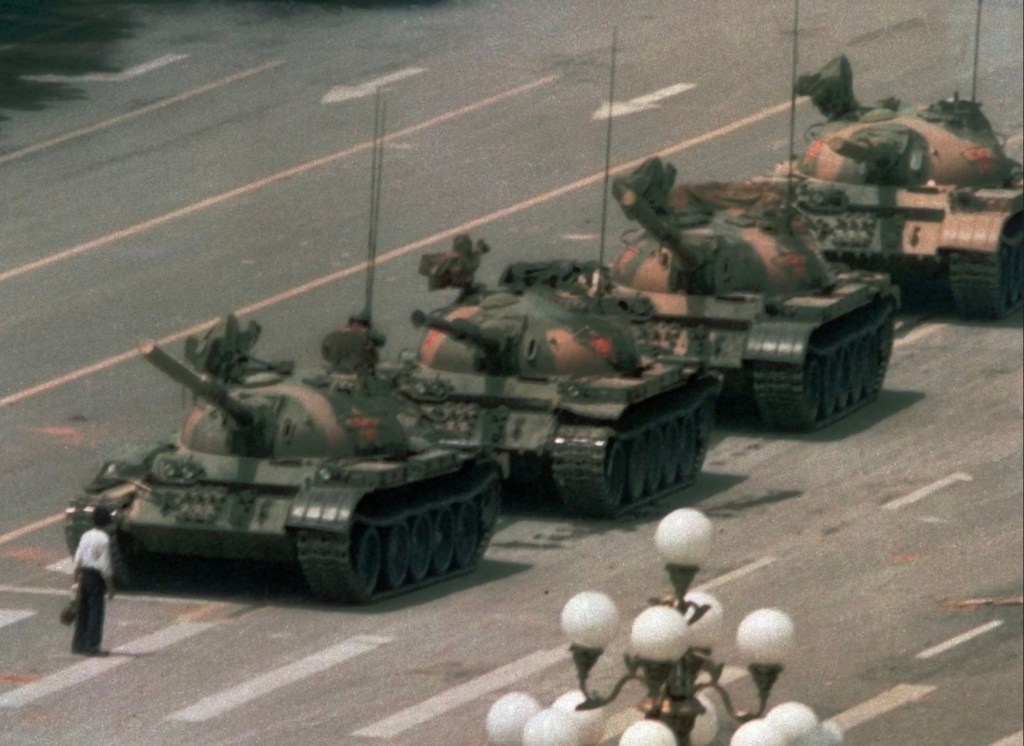
The world will never forget the Tiananmen Square Massacre, as highlighted by the U.S. Secretary of State on the 36th anniversary of the crackdown—an event that the Chinese government still attempts to erase from public memory.
Despite this rhetoric throughout these years and soon after the massacre, by the early 1990s, U.S.-China relations began to normalize, and by the early 2000s, the United States granted China membership in the World Trade Organization (WTO). This situation was similar to Pakistan receiving billions of dollars in loans shortly after the massacre of 26 tourists in Jammu and Kashmir, followed by a brief war with India.
Returning to the Tiananmen Square Massacre, there is no official death toll, but activists believe that possibly over ten thousand people were killed by China’s People’s Liberation Army in the streets around Tiananmen Square, Beijing’s central plaza, on June 4, 1989.
Even after 36 years, rights groups report that many individuals are detained, placed under house arrest, or go missing on this day year after year. Silence surrounds this anniversary, even though the history books have largely ignored it. Even the number “64” is considered taboo, as it invokes the date of the crackdown. Surprisingly, heightened repression continues, with police regularly warning foreign journalists against visiting Tiananmen Square.
Why do the events of June 4 remain so significant? Why is this date considered such a taboo? When celebrated artist Ai Weiwei was asked about it a few years ago, he responded, “The Party (Chinese Communist Party) cannot talk about it because that’s when they lost their legitimacy.”
To reclaim its legitimacy, the Party needed to offer something to the masses, which turned out to be economic prosperity and material gain. This “grand bargain” is succinctly summarized by Chen Ziming, a Beijing academic who was imprisoned for being accused of being the “black hand” behind the 1989 protests. He explained, “They didn’t implement political reforms, but they had an economic revolution.”
Reports on China’s economic miracle are often enthusiastic; per capita incomes are nearly 44 times higher now than they were in 1989. However, the economic boom has a dark side, as outlined by one of the government’s fiercest critics, Bao Tong. A former top official, Bao spent seven years in prison after Tiananmen, accused of leaking state secrets. He believes that rising living standards are masking a deeper problem: a kleptocratic free-for-all. “This was called progress and labeled the market economy, which sounded appealing. In reality, it involved taking assets from the people—state-owned enterprises—and giving them to officials, turning them into millionaires.”
The Communist Party learned a crucial lesson from the events at Tiananmen Square: to maintain stability, even violence may be necessary. This involves preventing protests from escalating and monitoring individuals seen as threats to stability. One of the first targets was dissident Chen Ziming, who was placed under surveillance after his release on medical parole in 1994.
Chen recounted, “Two cars, two motorcycles, and a bicycle followed us for years. Three men sat outside our apartment building. They got rid of the elevator attendant and replaced him with someone else.” He added, “Their own words were, ‘We’re moving the prison to your house. Your home is now a prison.’”
This situation is all too familiar for Bao Tong and thousands of others who lost their loved ones in the Tiananmen Square Massacre. The party always suspected such people of rebellion. Bao was always shadowed by plainclothes security personnel. For him, repression reflects the leadership’s fears: fears of the people, fears stemming from the consequences of unchecked economic growth, and fears related to their own historical legacy.
“The current problems are much more severe than those during June 4,” he says. “Unlike in 1989, today’s challenges—such as air pollution, wealth disparity, human rights abuses, and extralegal behavior—affect every single person.”
A quarter-century ago, the act of suppressing the population with tanks and guns became a defining moment for modern China. While the focus on economic growth has transformed China into the world’s second-largest economy, it has also led to significant issues: corruption, a crisis of morality, and an expanding security apparatus.
A woman in her 30s from Shanxi Province said she vaguely remembers hearing about the massacre, but she does not know the details. She added that she never learned about it and she doesn’t want to talk about it.
Sadly the party has succeeded and more younger-generation Chinese are unaware of the incident 36 years on. China’s history may hinge on that pivotal moment, yet today—more than ever—it’s a topic that cannot be openly discussed.


 Insightful Geopolitics
Leave a Reply