
In November 2007, in South Africa’s nuclear research facility Pelindaba, two armed squads attacked from opposite sides of the site. The first squad got through a 10,000-volt security fence. They destroyed intrusion detectors (probably with an insider’s help). They reached the emergency control center and shot a site worker in the chest. This team spent 45 minutes inside the heavily guarded perimeter without being contested by site security forces. The site holds hundreds of kilograms of weapons-grade Highly Enriched Uranium (HEU), which remained untouched. However, this kind of lapse demonstrates how easy it was for some hoodlums with weapons to take over a nuclear site.
The International Atomic Energy Agency (IAEA) has listed over 18 cases of theft or loss of plutonium or HEU. Many countries have been unwilling to confirm such cases. In most of the known cases, no one noticed the stolen material was missing until it was seized. This implies that many other thefts may have gone undetected.
When the Pakistani dictator President Pervez Musharraf gave up his post in 2008, the situation was so precarious that counter-insurgency expert David Kilcullen stated, “We’re now reaching the point where within one to six months we could see the collapse of the Pakistani state. “We have to face the fact that if Pakistan collapses, it will dwarf anything we have seen so far in whatever we’re calling the war on terror now.”
Imagine a scenario where rogue non-state actors take over the nuclear assets of Pakistan. This situation gives a headache to world leaders. The US security expert on South Asia and counter-terrorism, Bruce Riedel, had once stated, “Pakistan has more terrorists per square mile than anyplace else on earth, and its nuclear weapons program is one of the fastest-growing programs in the world.
NUCLEAR WEAPONS – AN INTRODUCTION
A weapon could be divided into two categories: Strategic and Tactical. In broad terms, a strategic weapon is one developed for mass destruction, like a nuclear missile. Whereas the tactical weapon generally carries a conventional high explosive warhead. These are not fixed definitions. There could be an overlap between how the terms strategic and tactical are applied, depending on the context. Nuclear weapons are specified as both strategic and tactical. A strategic nuclear weapon means an intercontinental ballistic missile (ICBM) that covers long distances and carries a very large and powerful high-yield warhead. Whereas a tactical nuclear weapon is much tinier, say a cruise missile or a bomb that covers short distances carrying a low-yield warhead. Therefore, a target of a strategic weapon would generally be a military base or city according to the war objective. On the other hand, a tactical weapon would be used against battleground targets that may alter quickly as per battle conditions.
PAKISTANI ARSENAL

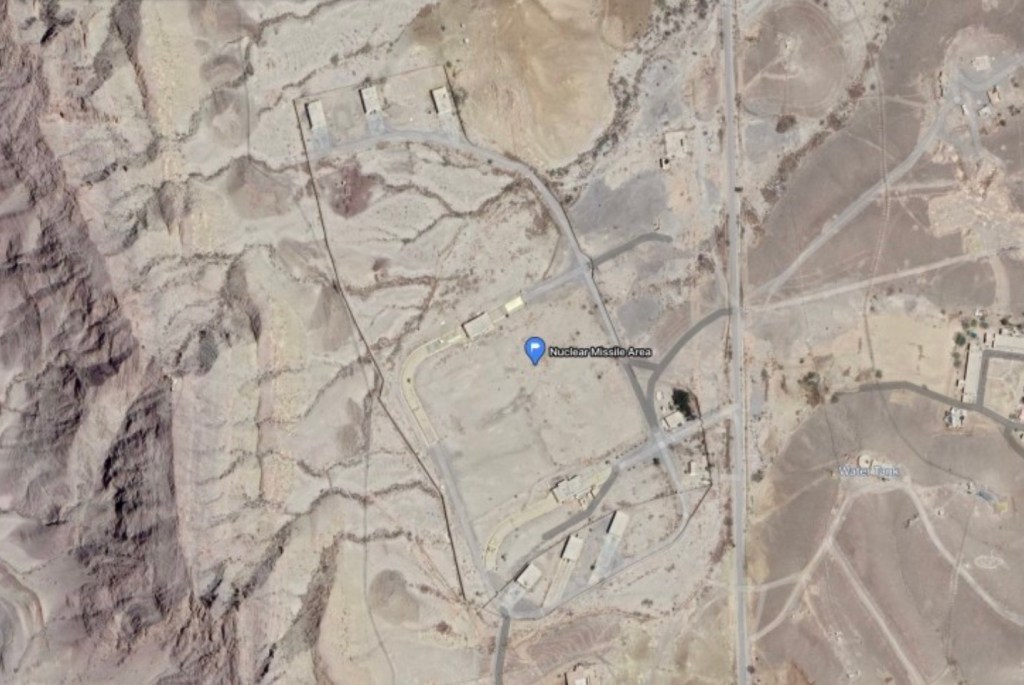
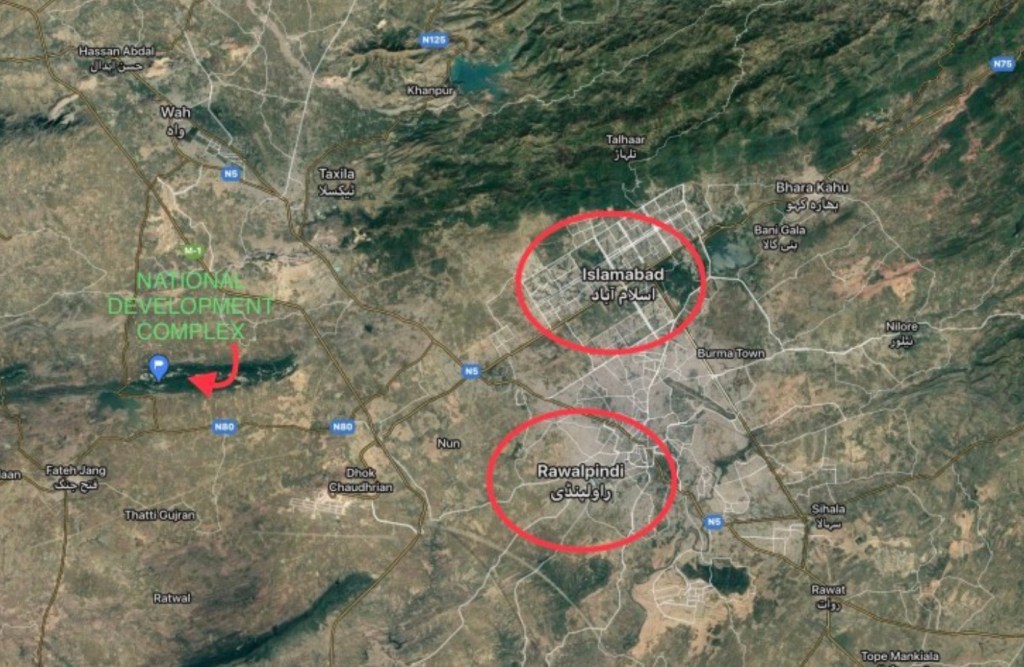
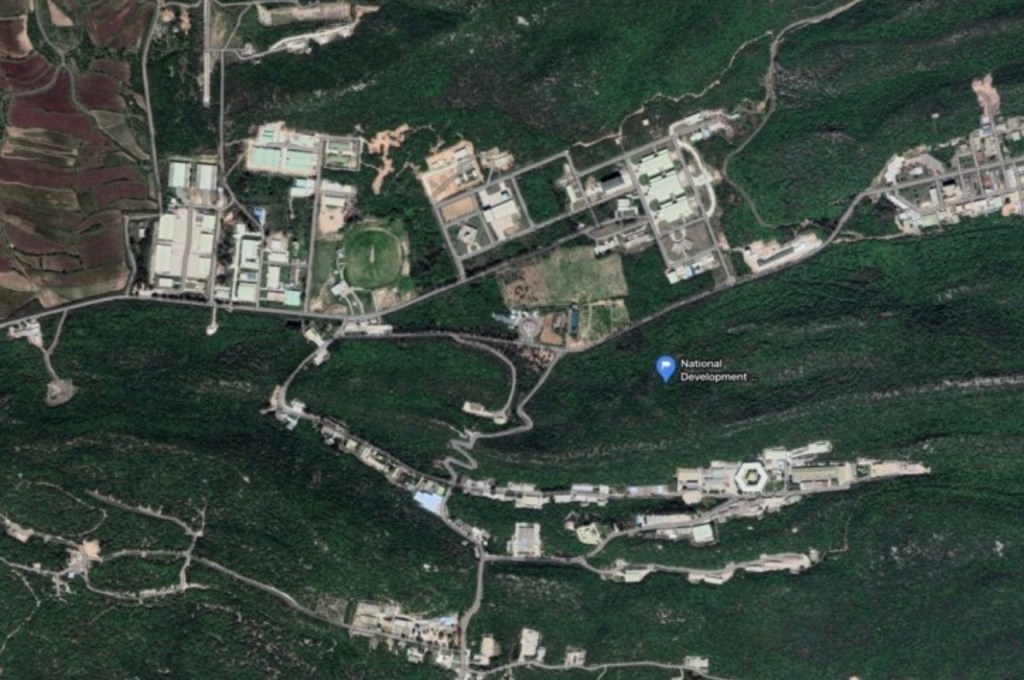
PAKISTANI NUCLEAR SITES




EXISTING SECURITY SYSTEMS
In 2000, Pakistan’s Strategic Plans Division(SPD) was created. During peacetime, SPD is tasked with protecting Pakistan’s strategic programs from internal and external threats. The most important task is to guard against theft or loss of nuclear material and infiltration of the strategic organizations by malicious-intentioned players. It is achieved through a combination of secrecy, security, counter-intelligence squads, staff screening programs, and procedural & technical controls.
The Pakistani military maintains strict privacy over the location of storage sites. The transportation and deployment of weapons are done under extreme secrecy rather than in convoys that have a strong but highly visible security profile. These security safeguards produce few apparent signs of activities, thereby lowering the risks associated with feasible theft or raid on weapons at their most susceptible point, in transit.
There is a three-tier security perimeter for nuclear sites, all three of which are the responsibility of SPD. The innermost perimeter was historically the commitment of the concerned strategic organizations. Following the A.Q. Khan scandal, Pakistan identified Khan Research Laboratory security staff as a key shortcoming, and SPD’s security division overtook responsibility for the inner perimeter. A second ring consists of fencing, electronic sensors, cameras, and security personnel. Finally, the counter-intelligence team’s work on identifying threats. The program is conducted by SPD in convergence with Pakistan’s three intelligence agencies (ISID, military intelligence, and the Intelligence Bureau).
Approximately 70,000 people work in the nuclear complexes in Pakistan, including 7,000 to 8,000 scientists, of which approximately 2,000 possess “critical knowledge.” One anonymous US official conveyed concern over what he recognized to be “firm efforts of several extremist groups to infiltrate the labs and put sleeper cells in place.” Another challenge for Pakistan will be keeping track of the increasing number of retired scientists and other personnel with critical knowledge. The most obvious case of Pakistani scientists interacting with militant Islamists involved two retired scientists from the Pakistan Atomic Energy Commission, Chaudry Abdul Majeed and Sultan Bashiruddin Mahmood, who met with al Qaeda commander Osama bin Laden. Khan’s scandal also clearly proved the dangers of such an approach.
Another safeguard is that every Pakistani warhead is now fitted with a code-lock device, which mandates a proper code to enable the weapon. Triggers and warheads are stored separately, necessitating that the terrorists knock over two buildings to get a complete weapon. Then there is a Permissive Action Links (PALs), a protective fail-safe system to guard against accidental or unauthorized launches of nuclear systems. A code is required to be entered in PALs before a weapon can be fired. Pakistan’s weapons reportedly employ the “standard two-man rule,” that is, two separate operators punch in codes or turn keys to arm and launch nuclear weapons. In some situations, this rule becomes a “three-man rule”.
SERIOUS THREATS
The nuclear weapons designers prefer weapons-grade plutonium, produced specifically to contain 90 percent or more Pu-239. However, this doesn’t restrict anyone hell-bent upon producing a nuclear explosive. The “reactor-grade” plutonium produced in the spent fuel from typical power reactors can also be used to make a fearsome bomb.
There are various threats to Pakistani nuclear weapons, accidents, accidental launches, an unstable dictator, internal disturbance, or a rogue scientist, but two of them are most important and most probable: an insider’s job or a terrorist attack. They may happen independently or a combination.
Insider’s Job: For year’s the terrorist networks have been seeking nuclear weapons. Osama bin Laden had stated that it was his “religious duty” to acquire nuclear and chemical weapons. Various terrorist outfits have made attempts to buy stolen nuclear material or attempted to recruit nuclear weapon scientists who could help them produce nuclear weapons. It is no surprise that the two extremist Pakistani nuclear weapon scientists met with bin Laden and Ayman al-Zawahiri shortly before the 9/11 attacks to discuss nuclear weapons.
A rogue scientist or religiously brainwashed individual working in a strategic organization is a threat that is less observable but poses the biggest challenge. Terrorist organizations are looking for such individuals who can steal nuclear material or technology from them. Such organizations with the correct technical and scientific expertise could construct a gun-style uranium device if they manage to obtain sufficient fissile material. Plutonium-based implosion-style devices are harder to produce for a non-state actor. Pervez Hoodbhoy, who is a Pakistani physicist, has a piece of apt advice for Pakistan in this regard: “Pakistan’s ‘urban Taliban,’ rather than illiterate tribal fighters, pose a nuclear risk of this sort”.
In the recent past, the Inter-Services Intelligence (ISI) Directorate has become a real threat to Pakistan’s nuclear facilities. Within the organization, they have elements that are sympathetic to the Islamic militant groups and look after their funding. In the past, ISI has been accused of involvement in perhaps two assassination attempts against Gen. Musharraf: one in mid-December 2003 and another in late September 2006. If those brainwashed fanatics could go after their own Chief of Army Staff then they wouldn’t hesitate to steal nuclear technology or fissile material for a nuclear weapon to be used against a ‘Kafir’ nation.
Terrorist Attack: The most serious attack against a strategic facility occurred outside the Pakistan Ordnance Factories compound at Wah on August 21, 2008. Wah is the assembly site for Pakistan’s nuclear weapons. Two suicide bombers walked up to the facility gates and detonated their devices during a shift change in the compound. The attack killed 70 and injured over 100. Two attacks in 2003 and 2006 by BLA on Pakistan Atomic Energy Commission facilities at Dera Ghazi Khan are also noteworthy. A successful breach of Rawalpindi-based GHQ’s outer ring of security by the non-state actors in 2009 was another example of weaknesses in the Pakistani system.
The above examples indicate that a terrorist attack against a military establishment may succeed partially but would fail miserably against a well-fortified nuclear facility. However, if terrorists use diversionary tactics, that is, instead of directly attacking the base, they attack a nearby non-nuclear facility, causing enough consternation and panic amongst the heads of the organizations, forcing them to move the nuclear weapons or material. That would be the right kind of opportunity for terrorists to ambush the nuclear weapon or material in transit.
Terrorists or non-state actors may also make use of war or a war-like situation. Recently tested Shaeen III missile is capable of reaching the Indian Andaman and the Nicobar Islands, denying India land-based second-strike capability. However, experts are more concerned about the use of the Nasr missiles. These missiles are battlefield nuclear missiles and have no clear-cut command and control status. During the war, nuclear mobile units would be scattered all over the battle zone. The mating of the weapons with delivery vehicles would be either in the field or before dispersal. These movements would pose several dangers not present in Pakistan’s peacetime posture. Horrible Pakistani road infrastructure may also contribute to the potential for an accident in transport. There has been concern about the security of mobile nuclear units when they are away from the static and reinforced security provided at a fixed storage site. These are the missiles that terrorists and non-state actors would be interested in. It would be easy for them to get hold of it in transit or the heat of battle. They may even convince the religious fanatic local commander to use the weapon without authorization. After all, Gen Parvez Musharraf, the deceased former Pakistani military dictator, contemplated using nuclear weapons against India amid tensions following the 2001 terror attack on the Indian Parliament.
WAY FORWARD
Chaim Braun, a professor at Stanford University, focuses his concern on the possibility of a rapid expansion of Pakistan’s nuclear infrastructure in the coming two decades. These additions would put a strain on the regulatory structure. Over the next 20 years, such a large-scale expansion considered by Pakistan’s nuclear authorities might compel the recruitment of an additional 18,000 trained personnel. Pakistani institutions do not possess the capabilities to adequately train such large numbers. Such a large pool of individuals could also be infiltrated by saboteurs or terrorists. In case of internal unrest or a coup attempt by terrorist sympathizers of the Pakistani army, the nuclear reactors would be desirable targets for rebel forces. More broadly, some commentators have expressed skepticism and the susceptibility of radioactive sources falling into terrorist hands. The concern is that terrorists with such material could then develop a radiological dispersal device (RDD), or “dirty bomb.”
In January 2025, there was confirmed news of the abduction of 16 nuclear engineers from a uranium mining site in Lakki Marwat, located in Pakistan’s Dera Ismail Khan. The incident may be an inside job, with suspicions of Pakistan’s military involvement in a broader scheme. Prominent human rights activist Amjad Ayub Mirza has raised serious concerns regarding Tehreek-e-Taliban Pakistan (TTP) stealing military grade uranium from the same site. He believes the situation is more complex. He accused Jihadi elements of Pakistan’s military of facilitating the theft to mask alleged uranium smuggling to Iran or making their dirty bomb in case their objectives are not met in a war.
Whatever we may say, the Pakistani nuclear weapons program would always remain a ‘Damocles Sword’ hanging over the head of the world. Even in the current India-Pakistan war, it seems the Pakistani Army has shown the boogie of a nuclear attack to the USA to snatch a victory from India’s clutches. I assess that as Pakistan inches towards bankruptcy in the coming 4-5 years, it would see fanatic elements in the Pakistan army facilitating non-state actors to take over the nuclear weapons to blackmail the world. If timely steps are not taken, humanity would not be left to ponder upon Aeschylus’s quote, “There is no avoidance in delay.”
References:
- https://www.futuredirections.org.au
- https://www.firstpost.com/world/can-pakistans-nuclear-weapons-fall-into-hands-of-terrorists-security-experts-are-divided-4470871.html
- https://www.amacad.org/publication/reducing-greatest-risks-nuclear-theft-terrorism
- https://www.isis-online.org/publications/terrorism/stanleypaper.html
- https://www.armscontrol.org/act/2009-07/features/nuclear-security-pakistan-separating-myth-reality
- https://fas.org
- https://carnegieendowment.org/2016/06/30/pakistan-s-nuclear-use-doctrine-pub-63913
- https://www.scribd.com/document/37599059/Pakistans-Nuclear-Security
- https://books.google.com.au/books?id=Pb2rDwAAQBAJ
- https://www.futuredirections.org.au/wp-content/uploads/2015/04/OP_PakistansNuclearSecurity.pdf


 Insightful Geopolitics
Leave a reply to TR Ravi Cancel reply