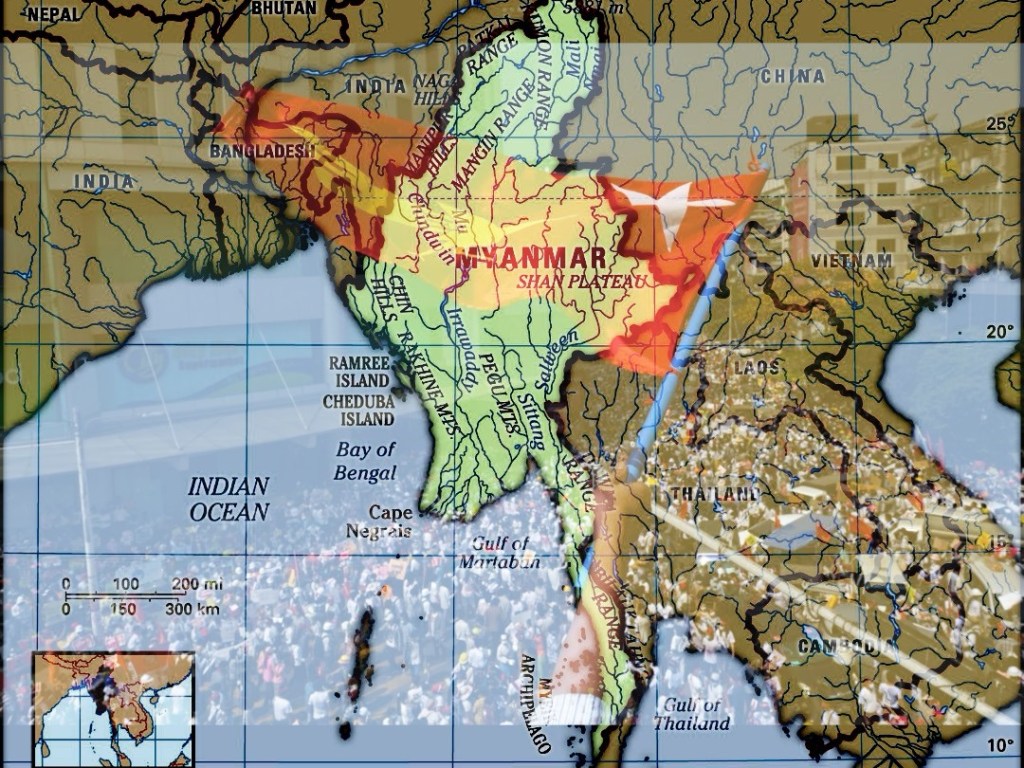
On February 1, 2021, Myanmar’s military, known as the Tatmadaw, seized control of the country and detained civilian leaders, including Aung San Suu Kyi and President Win Myint. This action severely hindered the democratic progress that had begun in 2011. Tensions had been rising between the military and Suu Kyi’s National League for Democracy (NLD), which had won the November 2020 elections by a significant margin. In an effort to challenge the election results, the Tatmadaw alleged that there was widespread fraud and claimed that the election commission had rebuffed attempts to address these issues.

The aftermath of 2021 coup is the heightened internal crisis. This has given rise to smuggling and the infiltration of armed groups along the 1,643 km Indo-Myanmar border. This situation directly affects Northeast India, prompting India to reconsider its policy on managing the shared Indo-Myanmar border.
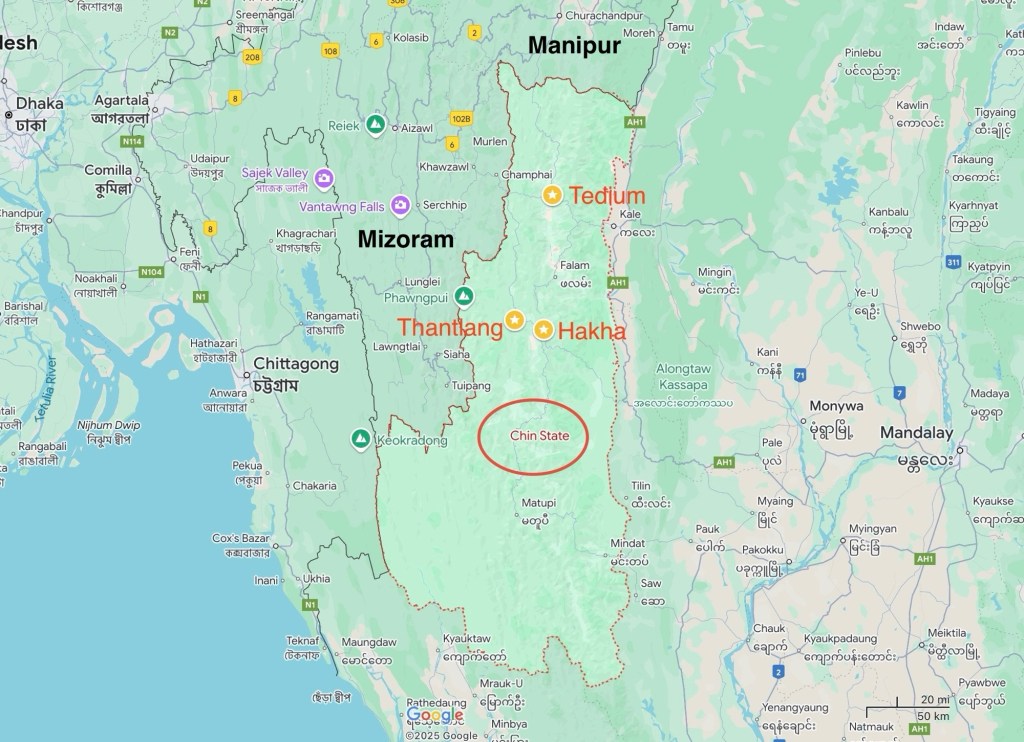
Most of Myanmar’s Chin and Rakhine provinces, which border India and Bangladesh respectively, are now largely controlled by the ethnic armed organizations (EAOs) in those regions. The Chin rebels have taken control of most of Chin State, which borders eastern Mizoram and southern Manipur. ‘Tatmadaw’ maintains a tenuous foothold only in the province’s capital Hakha as well as Tedim and Thantlang townships.

Chin rebels are steadily gaining control of Falam Township, which was once a key base for the Tatmadaw, housing both an infantry and an armored brigade. Currently, only one infantry battalion of junta forces remains in the area. All major highways and strategic locations in the province are now under the control of the Chin rebels. It is likely that Hakha, Thantlang, Tedim, and Falam townships will also fall into their hands within the next few months.

The Arakan Army (AA) currently controls nearly the entire Rakhine State, which shares a border with Bangladesh to the northwest. The only areas still under the junta’s control are the provincial capital Sittwe, the coastal city of Kyaukphyu, and the island of Manaung. The AA has launched significant offensives against these three locations, which are defended by infantry, armored battalions, the navy, and the air force.
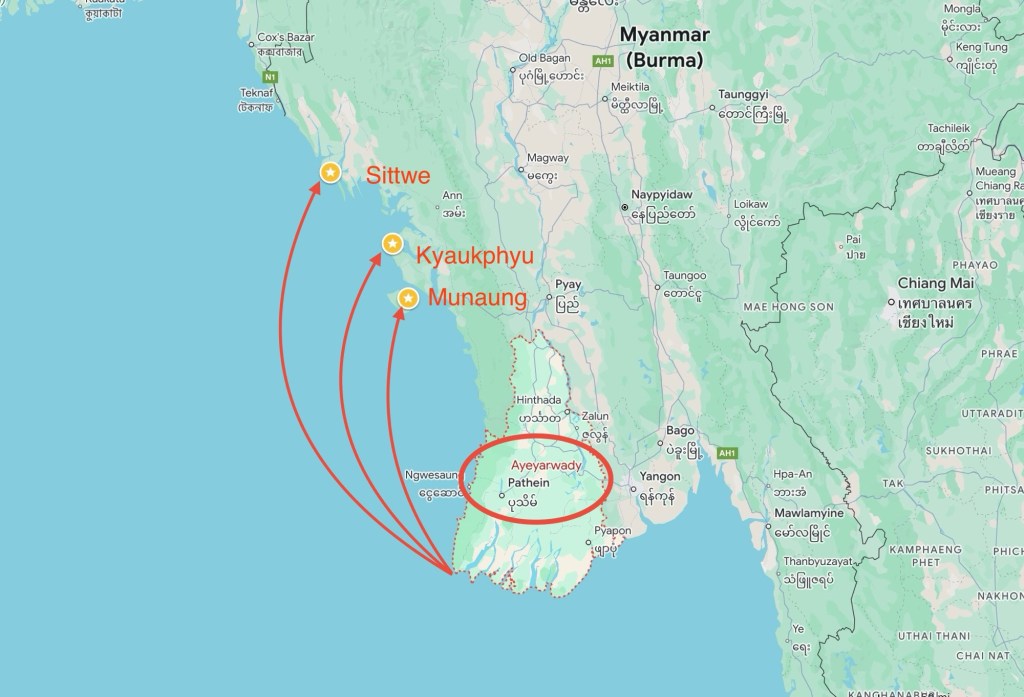
The junta is experiencing significant setbacks despite its fierce resistance. The rest of Rakhine State is firmly under the control of the Arakan Army (AA). The junta forces defending the cities of Sittwe, Kyaukphyu, and Manaung are surviving only because they are receiving supplies via sea routes from the neighboring Ayeyarwady Province to the south of Rakhine State. However, the AA and other resistance fighters are rapidly advancing into Ayeyarwady. If they manage to take over that province, the junta’s strongholds in the three cities of Rakhine will likely fall.

The recent takeover of Chin and Rakhine states by ethnic armed groups in a way is good news for India. Both Chin and Rakhine states are crucial for India’s ₹2904.4 crore Kaladan Multi-Modal Transit and Transport Project. The project will facilitate the transportation of goods from India’s eastern coast to Sittwe port in Rakhine. From there, goods will be transported using the Kaladan River to Paletwa in Chin state. Paletwa to Zorinpui in Mizoram (109 km), the cargo will move by the road.
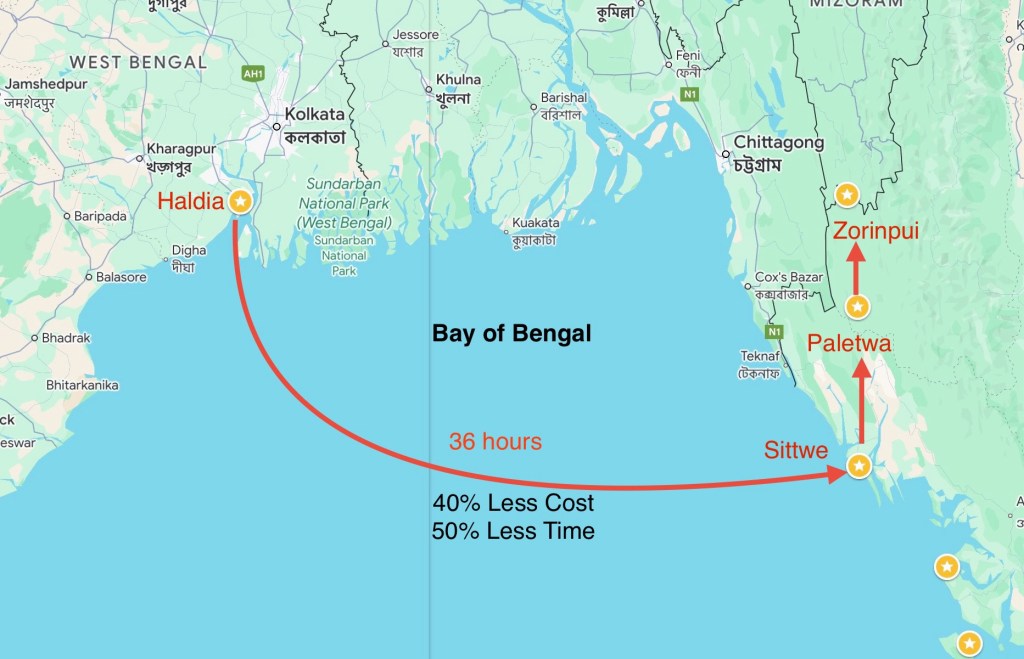
The project will overcome the disadvantages of geographical location of the seven landlocked Northeast Indian states. that now have to depend on goods transported through the circuitous land route through North Bengal. From Mizoram, the cargo can be easily transported to the other states of the region. The cost of transportation of goods through this route will be at least 40% and time 50% less than the existing Siliguri corridor route.
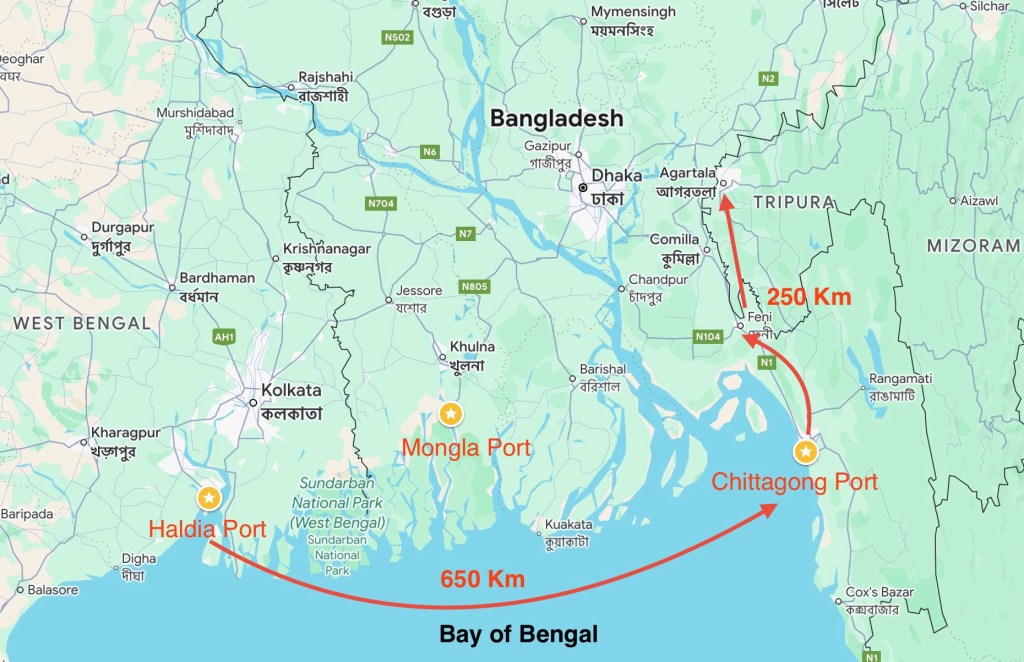
The 2018 agreement on using the Chittagong and Mongla ports to connect to the Northeast reduced the distance from 1,600 km to 900 km. However, with hostile Bangladesh aligning more closely with China, this agreement may be considered on hold, if not entirely abandoned. This situation further underscores the importance of the Kaladan Multi-Modal Transit and Transport Project.

The most probable scenario is that the Chin and Rakhine rebels will strengthen their positions and establish themselves more firmly within their respective states. The Chin National Council (CNC) and the United League of Arakan (ULA) will be in a strong position to negotiate a settlement with the junta, which will likely need to grant some form of autonomous status to both states.

In the past, the military has granted autonomy to certain regions in the northern and eastern areas of Kachin and Shan states that were captured by rebels. They may consider doing the same for Rakhine and Chin provinces. Ultimately, Myanmar may evolve into a loose confederation of states. This situation presents a significant opportunity for India while negotiating the Kaladan Project, as it would be dealing with individual entities: the United League of Arakan (ULA) in Rakhine and the Chin National Council (CNC) in Chin state.
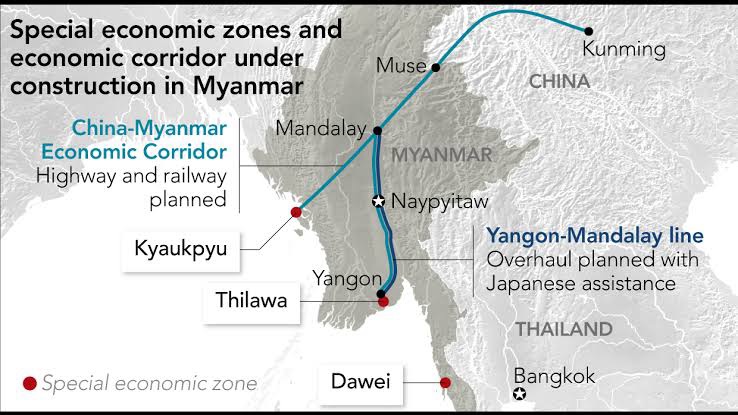
China also has strategic interests in Rakhine, where it is developing a port at Kyaukphyu and establishing industries within a Special Economic Zone. The country is also constructing gas and oil pipelines from Kyaukphyu to its southwestern province of Yunnan, making stability in Rakhine crucial for Beijing too.
Although India and China have differing views on many issues, this situation provides India with an opportunity to collaborate with China in urging Myanmar’s junta to negotiate with the Arakan Army and the Chin National Front. This collaboration aims to achieve a peace accord in Rakhine and Chin states.
Conclusion
A very important development that the mainstream media missed was Mizoram Chief Minister Pu Lalduhoma facilitating a merger between two rival factions of Chin rebels, the Chinland Council and the Interim Chin National Consultative Council, on 27 February in Aizawl. The merger resulted in the formation of the Chin National Council (CNC), bringing an end to the fierce conflict. Although his “unity efforts” faced backlash from government of India, it’s now recognized that this development could benefit India, especially regarding the Kalandan project, given Lalduhoma’s influence with the CNC.
India has also started actively engaging with the Arakan Army (AA) and its parent organization, the United League of Arakan (ULA). The support India has provided during the ongoing earthquake crisis, including the supply of relief materials, will further strengthen its influence in Myanmar. By maintaining open communication and playing a more prominent role in the region, India can make significant progress toward achieving its strategic objectives.
References:
icwa.in/show_content.php
acleddata.com/conflict-watchlist-2025/myanmar/
swarajyamag.com/world/india-must-swiftly-seize-the-strategic-window-in-western-myanmar-as-chin-arakan-rebels-push-back-junta
sarkaritel.com/how-16-new-routes-to-chattogram-and-mongla-ports-of-bangladesh-can-lift-northeasts-economy/?amp=1
m.economictimes.com/industry/transportation/shipping-/-transport/bangladesh-gives-india-permanent-access-to-chittagong-port-to-enhance-connectivity/articleshow/99893691.cms
thehindu.com/news/international/conflict-in-myanmar-is-worrying-india-and-bangladesh-hasan-mahmud/article67822543.ece#
irrawaddy.com/news/myanmar-china-watch/chinas-citic-and-myanmar-junta-discuss-progress-on-rakhine-deep-sea-port.html


 Insightful Geopolitics
Leave a reply to Sanjay Ohri Cancel reply