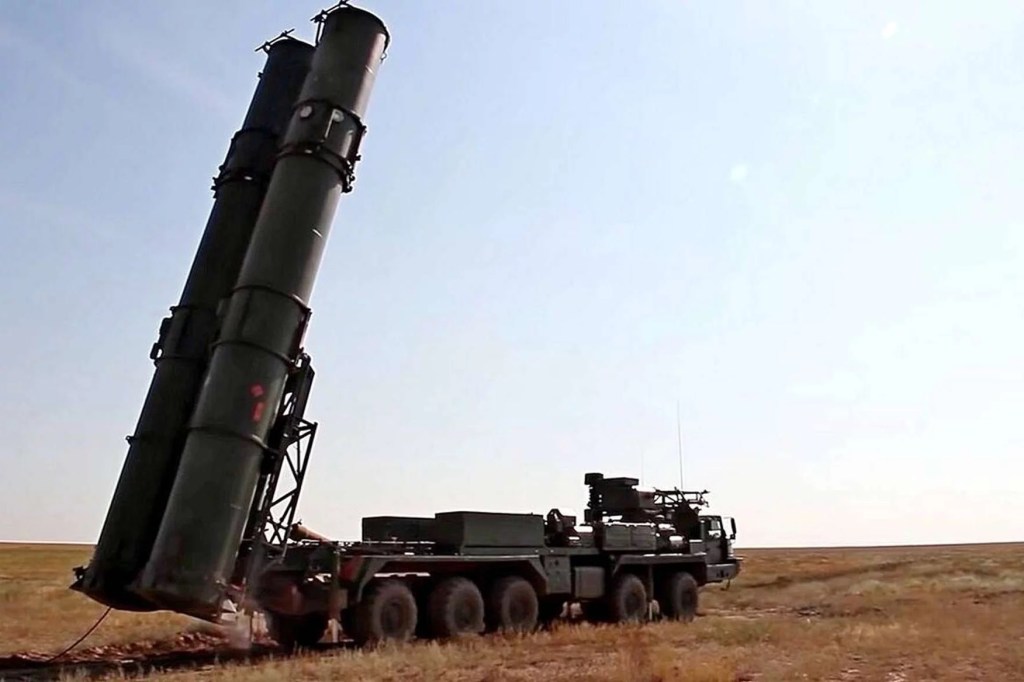
The Operation Sindoor against Pakistan, which involved airstrikes on Pakistani territory along the Line of Control (LoC) and the International Border, has been officially paused, not terminated. Over the course of four days, the operation significantly weakened Pakistan’s war-making infrastructure. Among the standout assets utilized were the BrahMos supersonic cruise missile and the Air Defence Systems, including Akash and the S-400 Sudarshan Chakra.
The combined strength of India’s Air Defence Systems successfully intercepted several Fatah missiles, including the Fatah I (with a range of 140 km) and Fatah II (with a range of 400 km). Notably, one Fatah II missile aimed at New Delhi was intercepted 220 km to the west near Sirsa. With its flat trajectory Fatah II was dubbed as an S-400 destroyer, however, shooting down the Fateh II has shattered Pakistani dream of having an edge over India. Due to S-400’s impressive performance, there are discussions about India potentially purchasing additional S-400 systems from Russia.

The S-400
In 2018, India placed an order worth $5.43 billion for five regiments of S-400 missile defense systems. Each regiment consists of two battalions, resulting in a total of ten battalions. Each regiment consists of two battalions, so India will deploy a total of ten battalions. Each battalion operates eight missile launchers, along with supporting radars, command centers, and reloading vehicles.
Until now, India has received four regiments, which have been deployed in Adampur, Pathankot, Rajasthan, and Gujarat. The delivery of the final regiment has been delayed due to the Russia-Ukraine conflict, and it is expected to arrive in later part of 2025. If India is seriously considering acquiring additional S-400 systems, it might also be worth exploring the option of the future-ready S-500.

The S-400 and S-500 missile defence systems, developed by Russia, represent significant advancements in military technology. These systems are designed to protect against various aerial threats, including aircraft, cruise, and ballistic missiles. While the S-400 has been in service for several years, the S-500 is the newer and more advanced system.
The S-500 is designed to complement the S-400 and enhance capabilities against advanced threats such as hypersonic missiles and low-orbit satellites. It incorporates several technological advancements over its predecessor, including improved radar systems that enhance target acquisition and tracking. The S-500 also features advanced missile systems capable of intercepting high-speed targets with greater accuracy. Both the S-400 and S-500 missile defense systems represent significant milestones in air defense technology.
The S-400 has proven its effectiveness and reliability in actual combat scenarios, notably during ‘Operation Sindoor.’ The S-500 introduces capabilities that address the evolving nature of aerial threats. The choice between these systems depends on the specific security needs and threat environment of a country. With its superior range, altitude, and technological advancements, the S-500 offers a more comprehensive solution for modern and future defence requirements.
The China-Pakistan Cooperation
In a significant decision, Pakistan has decided to acquire up to 40 units of the Chinese fifth-generation stealth fighter J-35A. This move signals an important shift in South Asia’s airpower dynamics, positioning the Pakistan Air Force (PAF) on a trajectory to outpace India for over a decade. Retired PAF Air Commodore Zia Ul Haque Shamshi has stated that the arrival of the J-35A fleet will provide Pakistan with a “12 to 14-year” advantage in stealth fighter capabilities compared to India’s current air inventory.
The J-35A, developed by Shenyang Aircraft Corporation, is China’s second fifth-generation stealth fighter after the J-20 “Mighty Dragon.” However, unlike the J-20, it is specifically tailored for export to key partners like Pakistan. The PAF first expressed interest in the J-35A last year, with Pakistan Air Chief Marshal Zaheer Ahmed Baber Sidhu announcing at a formal engagement that the stealth platform would soon join the PAF’s inventory.
He said “Negotiations for the procurement of the J-35A have been held, and the fighter will become part of the Pakistan Air Force in the near future,” suggesting a fast-tracked induction timeline. Recent reports indicate that Beijing is accelerating the delivery schedule of the J-35A, with initial aircraft potentially arriving in Pakistan as early as 2025, much sooner than the original two-year timeframe previously anticipated.
This urgency reflects China’s growing strategic alignment with Pakistan amid increasing tensions in the Indo-Pacific region, and underscores its intent to counterbalance India’s expanding military ties with the United States, France, and Israel. Multiple reports have confirmed that Pakistan has already sent its first cadre of fighter pilots to China to begin training on the J-35A platform, which clearly indicates that the deal has advanced beyond the planning stages.
Lessons From Russia
In the early 2000s, just like India, Russia struggled to develop a competitive fifth-generation fighter. The MiG-1.42 was the USSR’s dream of a 5th-generation fighter. The development of Mig-1.42 ceased after the USSR’s disintegration. This inability and operational gap made it increasingly important for Russia to field advanced ground-based air defense systems to compensate for the deterioration of its fighter fleet.
India is also not anticipated to deploy 5+ generation Advanced Medium Combat Aircraft (AMCA) within the original timeframe. Operationalization of Tejas Mk2 is also delayed. The whole situation gives Pakistan a strategic advantage in the region and an operational gap with India.
For the Indian Air Force, similar to the Russian Air Force, the absence of fifth-generation fighter aircraft and the insufficient number of 4 and 4.5-generation fighters compared to our adversaries has made the S-500 air defense system highly valuable as an asymmetric means of protecting our airspace.


 Insightful Geopolitics
Leave a Reply